
Recent Updates
04/17/2026 12:00 PM
Exclusive: Behind the scenes of McLaren's radical reinvention
04/17/2026 12:00 PM
Incoming electric Rolls-Royce SUV to feature split-bonnet design
04/17/2026 12:00 PM
Audi could hybridise RS3's five-pot to keep it on sale in Europe
04/17/2026 12:00 PM
Physical buttons poised to become key brand differentiator
04/17/2026 12:00 AM
Leasing firms slam overstimulated fleet EV market
04/17/2026 12:00 AM
Unsexy yet vital: Why tyres are worth obsessing over
04/17/2026 12:00 AM
How VW's new 'Unified Cell' will slash the price of its EVs
04/17/2026 12:00 AM
Autocar Great Women 2026: Ford's Lisa Brankin takes top award
04/17/2026 12:00 AM
Mercedes C-Class EV interior revealed with 39.1in Hyperscreen
04/17/2026 12:00 AM
Alfa Romeo Giulia
EV, Hybrid, Hydrogen, Solar & more 21st century mobility!
 It's been a quiet year since McLaren's merger with start-up Forseven – CEO Nick Collins explains what's next
"I said a year ago this is the most exciting story in automotive," says Nick Collins, sitting in his office in the McLaren Technology Centre.
"I still believe that's true." When Collins first said that to Autocar, his quote accompanied the bombshell revelation that Forseven, the nascent start-up he led as CEO, was merging with McLaren Automotive in a deal brokered by their shared owner, CYVN Holdings - an Abu Dhabi government investment fund.
The bold ambition was to revive McLaren so that it could truly compete with luxury rivals such as Ferrari, Aston Martin and Lamborghini. We broke the news in our 9 April 2025 issue, with Collins - an industry veteran who previously worked for Ford and JLR - outlining plans to expand McLaren beyond its core of two-seat mid-engined supercars and promising more details in a "bigger bang" event before the end of 2025. Twelve months later, those plans remain under wraps.
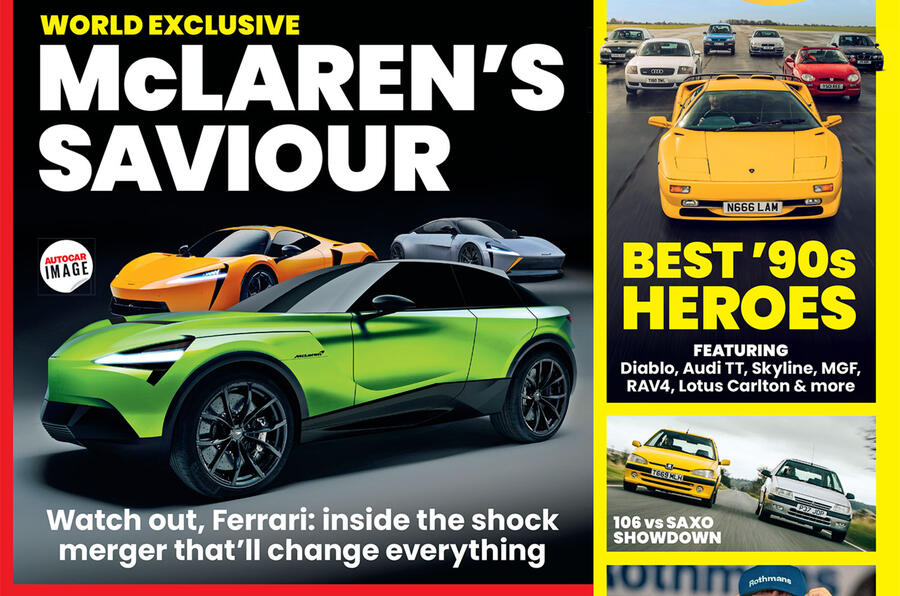
McLaren may be an exciting story but, like George RR Martin fans, we're left to question when the next chapter will actually arrive. Inside the company, of course, it has been different, as Collins explains: "We've had a hell of a busy year setting the groundwork for the future. We made some super-quick decisions and have done some really big, transformational things.
"We've committed more than $2 billion of investment and we're a debt-free company that now has the right foundations, with an unapologetically bold plan to grow and the means to do it." Exactly one year on, it's time for Autocar to sit down with Collins again, for an in-depth update and, yes, to press him on when we will finally see something tangible from the revamped firm.
Rebuilding McLaren
The early focus was to address "foundational things" to stabilise McLaren, starting with clearing its debt. "McLaren is a luxury brand, so we've really focused on quality," says Collins. "We've improved our warranty by 80% and our production quality by more than 60%." Annual production volume was also cut by around 1000, to 2000 cars last year. "We had too much stock in our dealers," says Collins. "Securing residual values helps our relationship with customers and gives us the platform from which to grow."
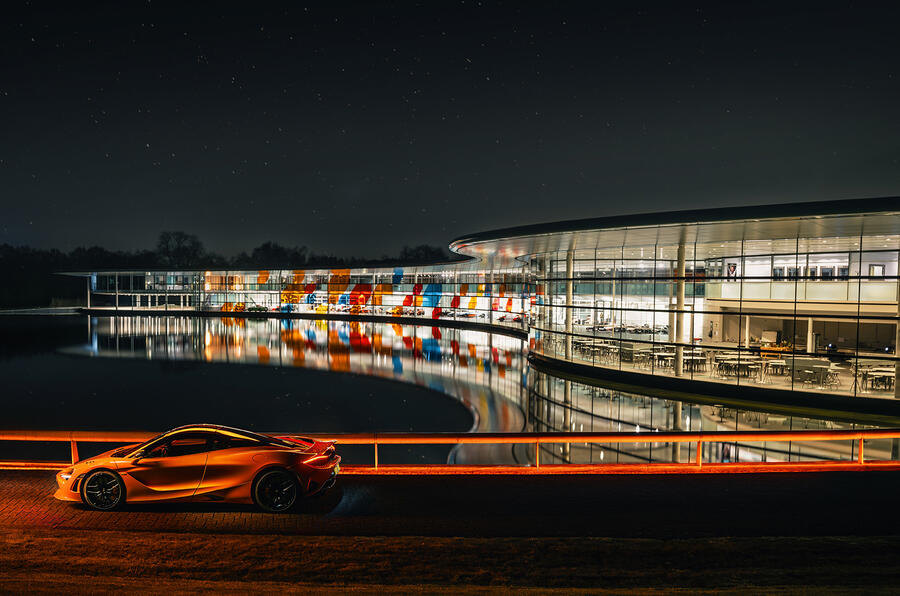
The integration of McLaren and Forseven - which had around 700 employees - sparked a reorganisation, and Collins acknowledges "some of our colleagues departed as part of that". Those included McLaren's then CEO Michael Leiters and chief designer Tobias Sühlmann, both of whom are now at Porsche. Collins says he was impressed by the "amazing people in McLaren", adding that "the depth of technical knowledge is phenomenal. It's a young workforce compared to some other firms, with very high technical talent."
Collins attributes McLaren's struggles in recent years to process, not personnel, explaining: "We didn't take decisions fast enough. We didn't make complicated things simple to make things faster. Like a lot of car companies, we have a lot of acronyms, and I believe passionately in plain language."
Collins admits that "different people embrace change in different ways", adding: "The reality of the business and where it was at was not as well known as it should have been, and there was maybe a false comfort around the condition of the company. We needed to do things urgently to get to where we need to be, and we still need to act with urgency, because we have to grow this company.
"We're in a privileged position of having the financial means to go and pursue that opportunity. It's more exciting to have a bold ambition than it is a half-filled ambition."
Targeted investment
The £1.5bn invested by CYVN is going towards "new product and capabilities to execute that new product", says Collins. There has been a major overhaul of McLaren's IT systems, for instance: "We're determined to grow in a super-efficient way and not become stuck with legacy data systems slowing us down. When you see what Chinese companies have built, we tend to think about the product, but the underlying systems and technology they're using unlocks their speed to market."
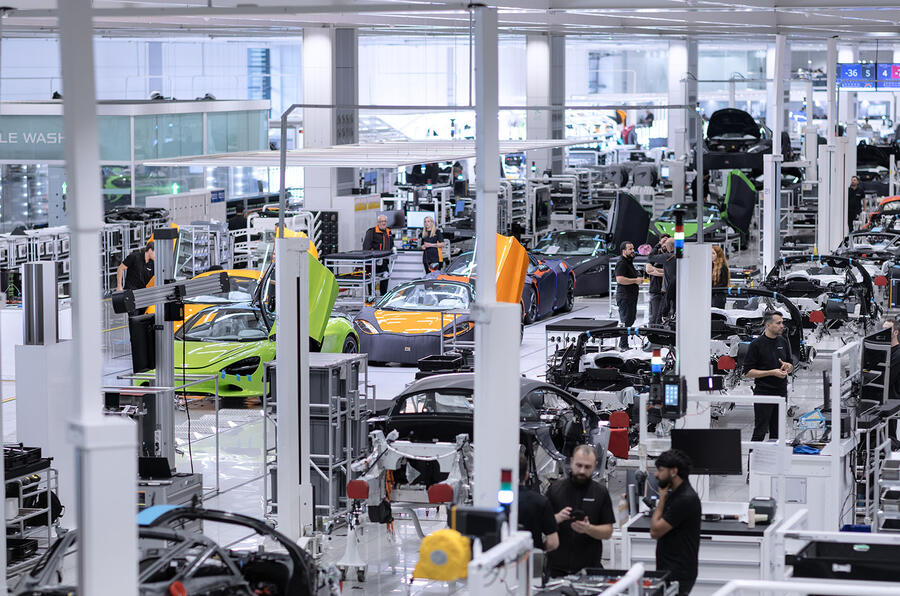
Beefing up the design team has been another focus. A state-of-the-art design studio and full clay modelling shop in Bicester now provides far more space than the small facility at Woking, enabling the team to work on more projects faster. While a large part of the former Forseven team remains in Bicester, McLaren is committed to stay in Woking alongside the Formula 1 team. CYVN has worked to secure the MTC as the long-time home of the McLaren brand after the lease to the site was sold in 2021.
The future plan
Collins says he has been "humbled" by his interactions with McLaren customers at various events, noting that "the passion for the brand way outpunches the reality of the company at the moment". Building on that passion is key: "We're determined to be a luxury company but not have any arrogance. It goes back to Bruce McLaren's era: he had a certain maverick nature [and] his team had a spirit, a joy in what they were doing. We want that in our team."
The restructuring and merger process was completed by around October last year, and since then "we started doubling down on exactly what we were going to execute for the future [and] how we were going to do that, with which technologies and in which sectors". Late last year, McLaren bosses met retailers and showed them full-size design models "of everything we're going to do through the end of the decade".
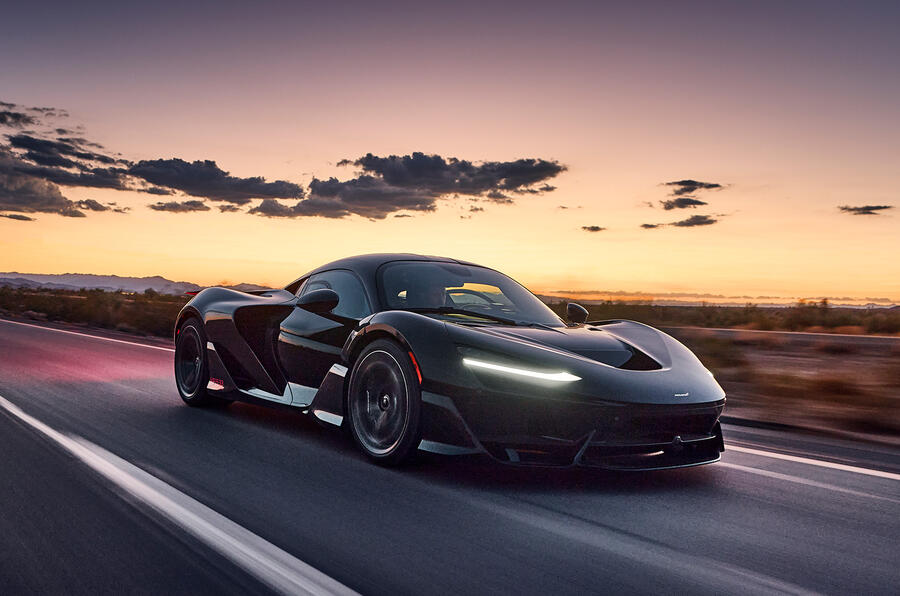
So why no public unveiling yet? "We changed our path in terms of when we wanted to do that, not what we were doing," answers Collins. "We showed some of our retailers and employees but we chose not to extend that into the media arena." When pressed, he insists that this wasn't due to any delays, rather a focus on "how we wanted to do something". He insists that "from this summer we will start to unpack visibly. After that there will be a very rapid and consistent narrative."
Deliveries of the W1 hypercar- the 1275bhp V8-engined hybrid successor to the P1 - will start this summer, and the hint is that any announcement could come around then. While he won't go into specifics, Collins is clear that "the overall portfolio will grow over time", and he says McLaren will have "more differentiation" so it's easy to understand "what each car is doing in the portfolio".
Line-up flexibility
Having spent a year working at McLaren, Collins says the plan hasn't changed but "evolved". He elaborates: "We took early decisions, even pre-closing [the deal], because we knew where we wanted to go with the business and the reality of the market at the moment. We made very quick decisions around propulsion technologies. We've evolved the plans because we could see a clearer way of locking in a sustainable competitive advantage long term. And, of course, the more time you spend driving these cars, you understand elements of the recipe are applicable in multiple different segments or can be applied in a unique, brand-defining way to a different segment of vehicle that McLaren has never participated in."
Collins "still believes vehemently the long-term trajectory will be towards EVs, but it was never going to be a linear line". He adds: "We will do an electric vehicle when our customers want one. We're not going to force it into a market that doesn't yet want it, and right now the market doesn't want it. We have the tools to deploy EV at the point that we need to do it. That clarity of purpose is important to accelerate our plan. We are very clear on the technological building blocks to execute our portfolio."
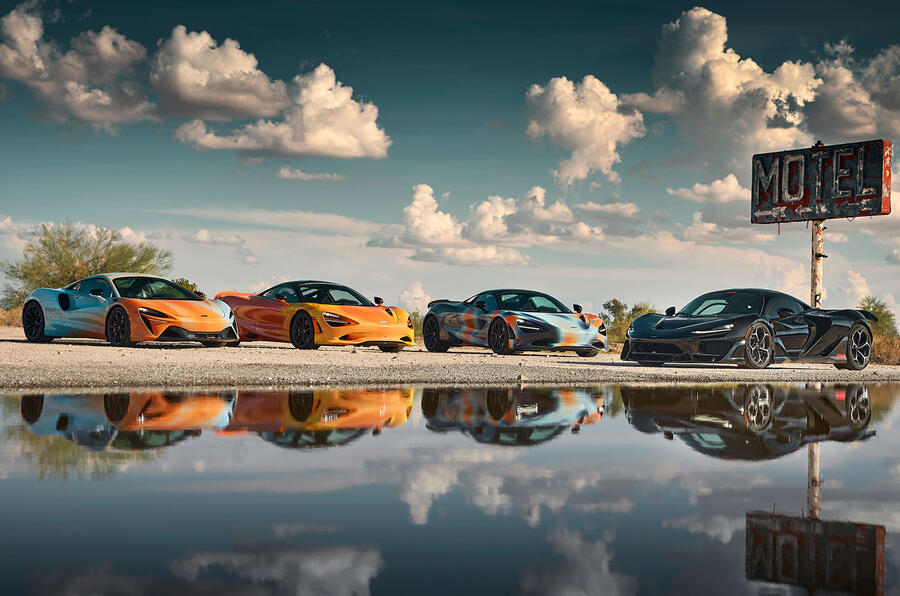
This raises a question: since the model plan for 2030 exists in clay form, does McLaren have the flexibility to offer some of those models with electric technology if demand changes? "I have to be careful how I answer that," laughs Collins. "We have flexibility but not in the traditional sense. The way we've gone about that flexibility is unique. But factually, we will only push EVs into that flexibility at the point somebody is asking us to do it - and, very clearly when we talk to our customers, that time is not now."
In terms of that portfolio, Collins is sticking to his line that "we will do everything we've always done but even better and some more things as well. Certain things are bankers, very logical things for us to do. But there's that maverick spirit here that goes back to Bruce's day: people come up with left-field ideas and we have the spirit to explore those."
Greater customisation
One area of the business that will grow significantly is McLaren Special Operations (MSO), the customisation division. Collins sees special models as vital for helping push McLaren firmly into the high-end sphere. "We've got incredible craftspeople in MSO and we want to broaden that offer," he says. "We want more people to tailor their cars and increase personalisation as a percentage of our total order bank. People go there with their dreams and that team makes them come to life. Some of our customers have decades-long connections to the brand and their own views and ideas."
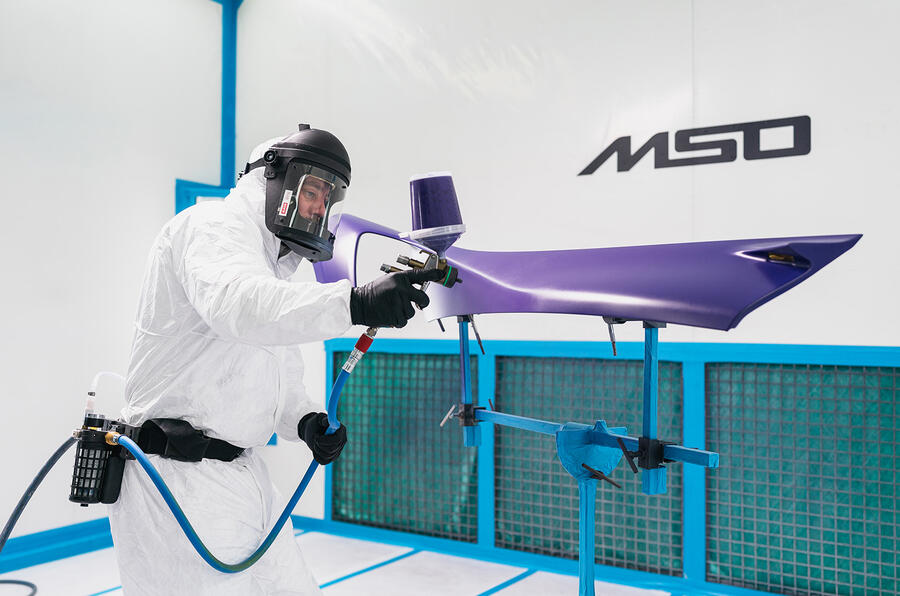
Collins insists that he's receptive to feedback and ideas from existing buyers, saying "we're not so proud or corporately stuffy to think we're the custodians of every good idea".
The next year
Collins insists that McLaren is in a much better position than last year - and poised to capitalise on the challenges being faced by luxury rivals. "We dealt with that last year," he says. "My determination is to grab that opportunity before everybody else has settled their restructures. To take a racing analogy, we're going to put the pedal down and overtake before they can press the accelerator."
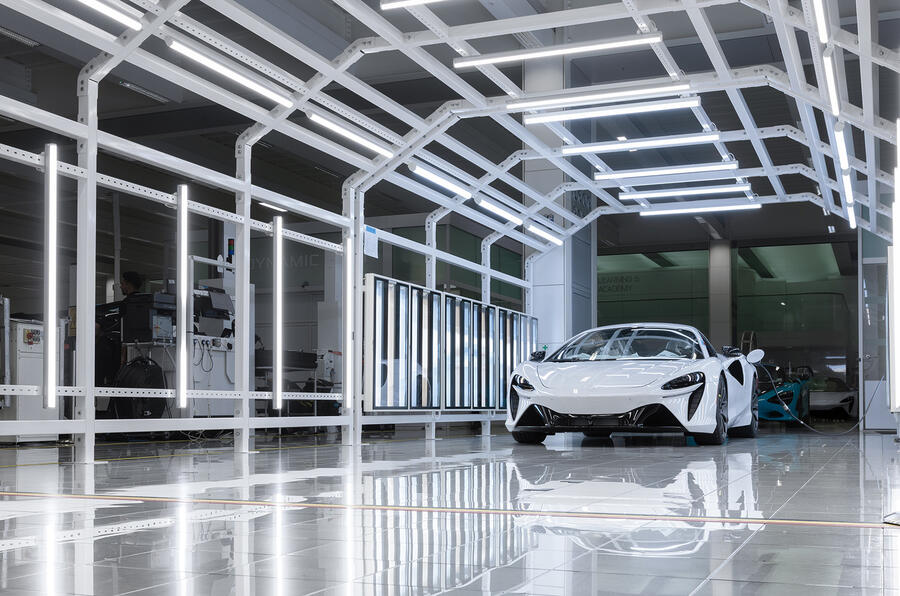
So, if we return again to speak to Collins this time next year, where will McLaren be? "We will have definitely launched a few things into the world," he says. "People will understand our trajectory and they will feel the underlying spirit and persona of the company. I believe there will be huge excitement around what's next."
Learning lessons from the track
McLaren Automotive is now a separate business from the McLaren Group, which encompasses the Formula 1 team, but the two still share a base and brand identity. "The two businesses operated quite separately in the past, not to the benefit of the underlying brand," says Nick Collins, but promises that will change in the future. "[McLaren Racing CEO] Zak [Brown] is a brilliant entrepreneur," he continues, "and we're super-aligned on what we can do. We communicate daily.
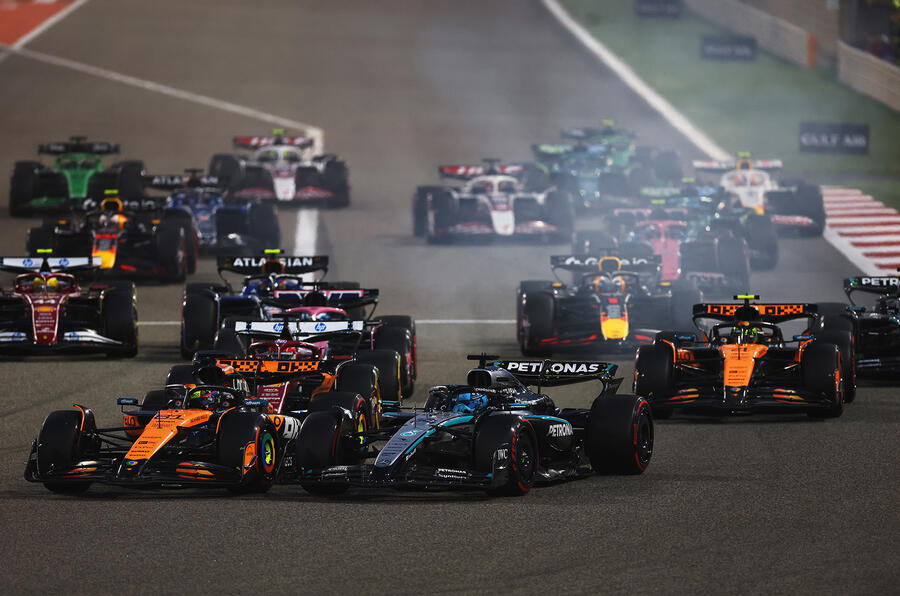
"Look at the F1 team's results, look at how they communicate, their fans, sponsors and ethics, how they hold each other to account in the right way. There's a lot to learn about the way they operate. The technological solutions might be different, but the way they do it is teachable."
After years of struggles, McLaren won both F1 titles last year, and Collins acknowledges the parallels with McLaren Automotive's current restructuring: "Zak has been very open to me about that journey, and we recently shared a bit about where we're going with them. What spins from that is ideas and what else we can do together."