
Recent Updates
06/07/2026 12:00 PM
Inside the Leapmotor-Stellantis deal that's changing the car world
06/07/2026 12:00 PM
My 1992 V8 Range Rover only costs me £100 in repairs each year
06/07/2026 12:00 PM
The rise of the virtual gearbox: Why EV sports cars are faking it
06/07/2026 12:00 PM
The finest cars of Buick
06/07/2026 12:00 AM
How the Daewoo Matiz began life as a Fiat concept
06/07/2026 12:00 AM
The world’s coolest police cars
06/06/2026 12:00 PM
Exclusive: Testing Renault's top secret new cars - with the firm's boss
06/06/2026 12:00 PM
How the RAF helped make Britain a sports car mega-power
06/06/2026 12:00 PM
21 controversial models from famous car manufacturers
06/06/2026 12:00 PM
The brilliant car designs of Giorgetto Giugiaro
EV, Hybrid, Hydrogen, Solar & more 21st century mobility!
 Stellantis and fast-moving firm Leapmotor joined forces three years ago – what's next?
European manufacturers have faced significant disruption and challenges in recent years, but the rapid expansion of Chinese firms into the region presents the biggest existential threat to their survival yet.
How can legacy car firms, already struggling with the cost of electrification and ever-shifting legislation, combat aggressive rivals who are out to rapidly grow market share through being leaner, faster and, most crucially, able to sell vehicles far more cheaply? Tough ask.
But what if, instead of trying to take on and fight the Chinese invaders, you help them? That's the approach taken by Stellantis - whose brands include Citroën, Peugeot and Vauxhall - in its innovative partnership with Leapmotor.
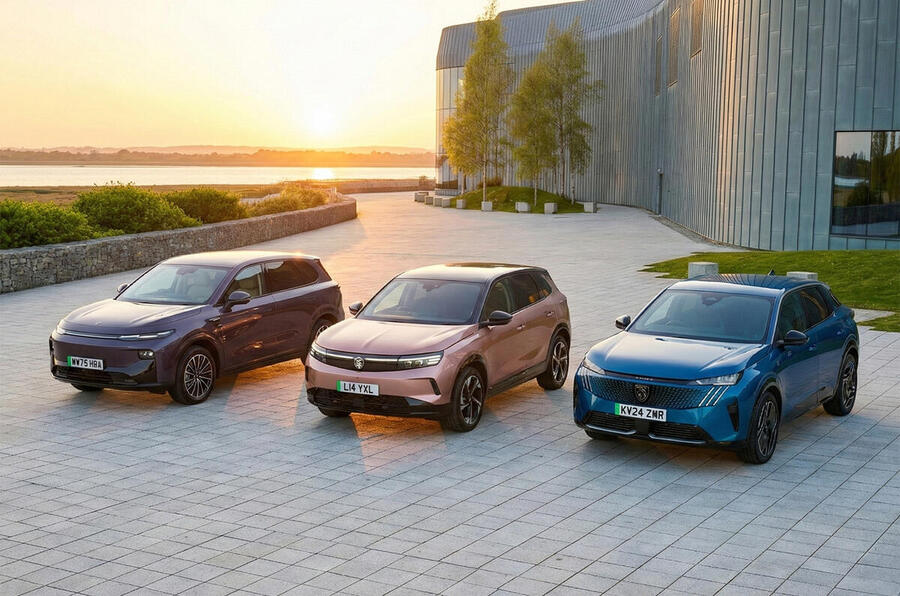
In 2023, the global car giant acquired a 20% stake in the then eight-year-old Chinese vehicle maker, which included the creation of a joint venture, Leapmotor International, to sell the nascent firm's cars overseas. But the deal is fast-growing: Leapmotor are going to start building cars at a Stellantis plant in Europe – and Vauxhall will launch a new SUV built in partnership with the Chinese company.Â
So how is this partnership developing and can a global car giant and an ambitious start-up really find a way to work together for mutual benefit?
Leapmotor's origin
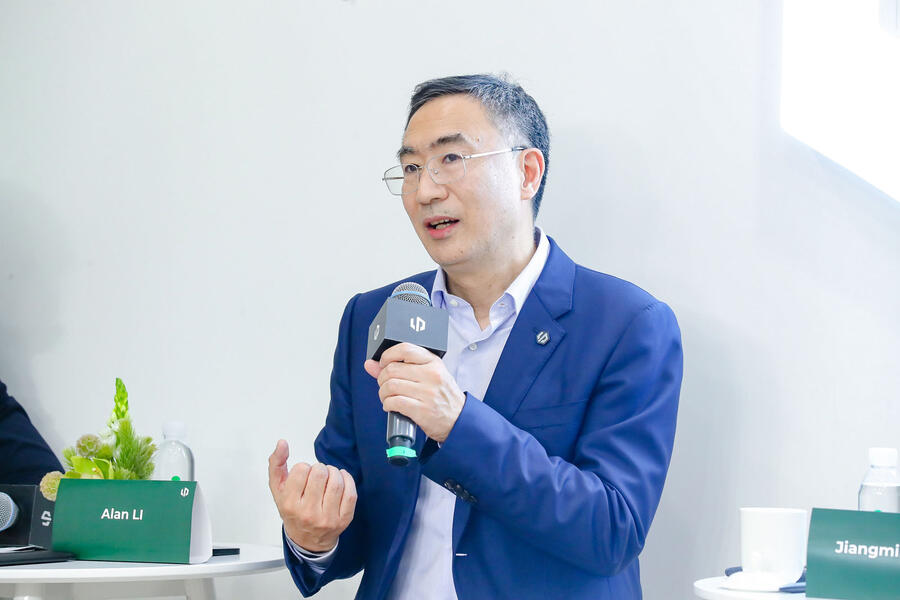
Slightly awkwardly, given Leapmotor's international partner, it was a Renault Twizy that inspired Jiangming Zhu, pictured above, to start a car firm. He spotted one when on holiday in Valencia in 2015 and claims it made him realise electric vehicles were about to disrupt the industry.
Zhu made his fortune in a very different business: he was a co-founder of Dahua Technology, the world's second-largest maker of surveillance equipment. (The US and UK governments have both prohibited the use of the firm's technology in government buildings.) Along with the other Dahua shareholders, Zhu founded Leapmotor in late 2015 and it was part of a rush of new energy vehicle (NEV, which in China includes electric and hybrid cars) start-ups as the state heavily pushed EV technology. Zhu ran both firms for six years before stepping away from Dahua to focus purely on Leapmotor.
As the realities of the market hit, hundreds of Chinese NEV start-ups failed and only a handful now survive, including the likes of Leapmotor and Nio. Zhu says the firm's focus on advanced technology has been key, but "our USP over other Chinese manufacturers is that our business model is highly vertically integrated".
The company claims that 65% of the value of the car, including crucial elements such as the batteries and electric motors, are produced in-house, which Zhu calls "a competitive advantage".
One area where that competitive advantage resonates is speed, both in terms of development and production. Zhu says: "Twenty years ago with petrol cars, US, Japanese and European car makers had a technology and skills advantage. Chinese manufacturers have been working on ICE cars for decades, but we were never going to be in a central role. But in the EV age, we have all the supply chains, we produce all the components, and we benefit in cost and quality. We have an advantage compared to European firms, particularly in components such as batteries."
Leapmotor sold around 600,000 cars globally last year and aims to increase that to one million this year. The bulk of those sales remain in its home country, but it is growing fast elsewhere. Its models arrived in the UK last year and are sold through Stellantis distribution channels, with the firm racking up 4273 sales. That's growing: Leapmotor has already achieved 3676Â sales in the first four months of 2026.
Going global
Given Leapmotor's ambitions, the firm was never going to settle purely for success in China. Indeed, Zhu claims: "We have been preparing to go global for a long time." Linking up with Stellantis to do that might seem unusual, but it's all about speed.
In 2023, Stellantis paid €1.5 billion (£1.3bn) for a 20% stake in Leapmotor and the two firms founded Leapmotor International, which has exclusive rights to manufacture and sell Leapmotor cars outside China. It's a joint venture, with Stellantis holding a crucial 51% stake. Leapmotor International CEO Tianshu Xin is a long-time Stellantis executive and has since also been named Stellantis China's chief operations officer.
"We are empowered by Stellantis," says Zhu. "We use their sales channels, marketing and financial services, and it makes us very fast. This partnership will give us an even stronger advantage over our competitors".
To expand globally, a car firm would usually need to find importers to work with in each country, or set up bespoke infrastructure. "That will take many, many years," says Xin, "especially because each region is different, with a different market and different customers. Speed is key and Mr Zhu is very pragmatic. He's an entrepreneur so he understands how many years it would take to be successful. We're already there."
As for Stellantis, Xin describes the deal as "very well matched for both parties". He says: "When we signed the deal, Leapmotor was selling 140,000 cars so they needed to scale. Stellantis is a perfect partner: it's a creation of many different companies, with 14 brands. Leapmotor is now a Chinese brand in the portfolio."
A key appeal to Stellantis was that working closely with a Chinese firm would give it an advantage in the world's largest car market, where Western brands have found it increasingly difficult to compete.
"The Chinese market is so different," says Xin. "The technology is different. The customers are different. In China, every car is like a mobile phone. So taking a car designed, developed and produced in Europe and localising it here doesn't work any more, from either a product feature or cost perspective. Global car firms need a presence in China, but to do that you need to work with a local partner who can help you develop the product you need at the speed and cost base it's needed."
Xin also believes that Leapmotor's Stellantis link gives it an edge in winning over the trust of European customers. "Before we launched, I spoke to dealers and customers to try to understand the pain points of a new Chinese brand. Number one was trust: you don't want to buy a phone if the company that made it disappears tomorrow."
He cites the example of a lack of a service network or parts supplies, which has caused issues for some early-arriving Chinese brands, and notes that Leapmotor spares are distributed by the proven Stellantis network.
That co-operation could extend as far as the development of a shared platform that could be used for models from both Leapmotor and other Stellantis brands, possibly built at Leapmotor plants in China. Xin says they "will not rule it out completely", describing it as a "great idea [that] is certainly under exploration".
The push for scale
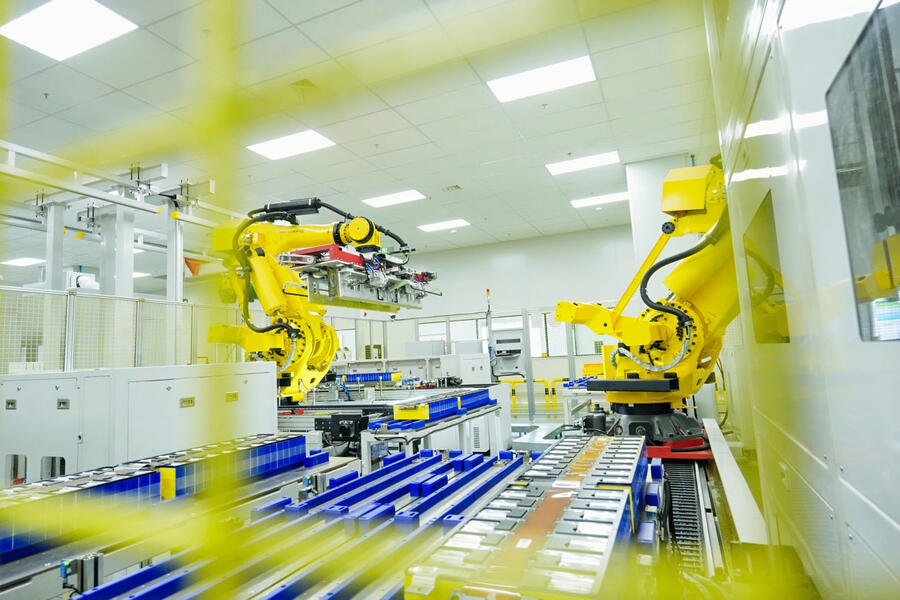
If it seems odd that a global giant such as Stellantis would be interested in access to Leapmotor's components, you just need to visit Huzhou in China. While Leapmotor vehicles are largely built in a facility in the firm's home city of Hangzhou, nearby Huzhou is home to a vast electric motor plant, and a battery factory run by sibling firm Leapenergy.
Both are massive. The battery plant can produce 383,000 battery packs a year and has the facilities to assemble everything from EV and PHEV packs to 12V batteries. Leapenergy runs two similar sites, and an even grander facility in Wuyi that is described as (deep breath) the world's first million-level super-integrated battery gigafactory. In short, it's a single site that can produce just about every part of a battery, from the cell packs to the cooling cases -Â and it has a capacity of around two million complete units per year.
The expansion won't stop, either. Later this year, Stellantis will start to produce the Leapmotor B10 at its plant in Zaragoza, Spain, as part of broader deal that will involve hellping Vauxhall develop a new SUV. During our interviews, both Zhu and Xin decline to fully confirm reports that Leapenergy will open a battery plant in the city. But on a huge map of production facilities in the visitor centre of the Huzhou battery factory is a photo of the Zaragoza plant, saying that it will open this year with a capacity of around 200,000 units. Told you they were fast.
The all-in-one electric drive system factory is similarly dizzying in its scale and ambition, not least because it's barely opened and Leapmotor is already building another next door, with two more planned nearby. When complete, the site will be able to produce 3.5 million electric drive motors a year, including everything from the gears and shell casings to the main drivetrain components, that Stellantis will have access to.
Leapmotor's future
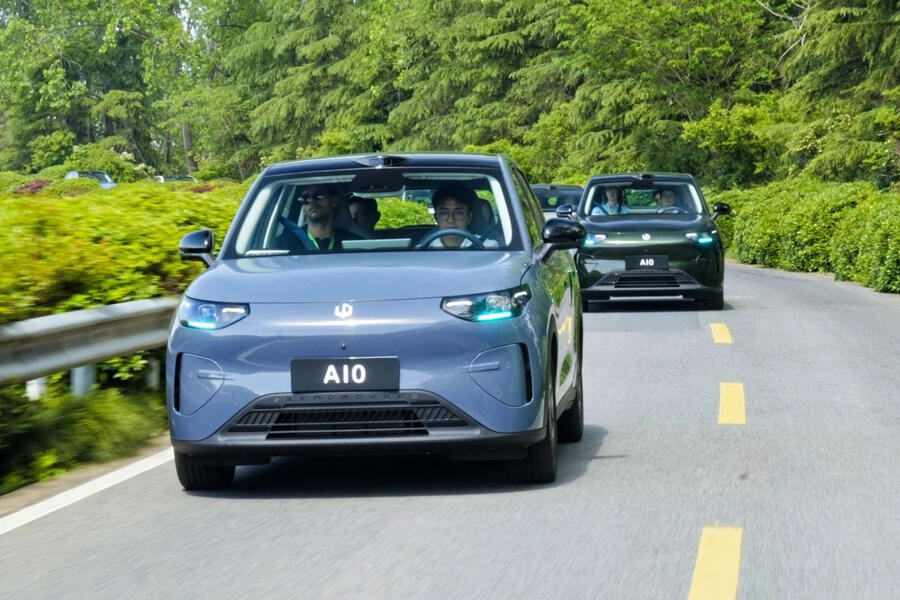
The goal is for Leapmotor to move beyond appealing on cost in Europe and to win buyers over through technology, particularly autonomous systems. And quickly: Xin estimates "you still need at least 10 years" to build a new brand in Europe, while noting that's quicker than when Japanese and Korean firms arrived in the 1980s and 1990s.
But the intent is clear. Zhu is friendly, softly spoken and uses an interpreter, which contrasts with his unbridled ambition. He highlights the rise of autonomous vehicles and says: "In three to five years, I believe cars will be totally different compared to today."
And that, feels Zhu, will lead to a changing of the guard. "It's similar to if you think of smartphones replacing traditional phones: all the brands that make traditional phones have disappeared already," he says. "To be one of the top 10 global car manufacturers, you need to sell around 3.5 million cars per year. In the future, I believe five or six of the top 10 will be Chinese companies."
Of course, while Leapmotor wants to crack that top 10, Stellantis - which sold 5.4 million vehicles in 2025 - is aiming to stay there. Can a partnership help an aggressive Chinese firm grow and shore up a global giant's defence of its market share? Leapmotor International is out to prove that's the case.
If at first you don't succeed, crack on
Leapmotor's first car, a two-seat sports car called the LP-S01, wasn't a sales smash. But the firm has invested heavily in developing its own manufacturing infrastructure and technology, including its own artificial intelligence chip.
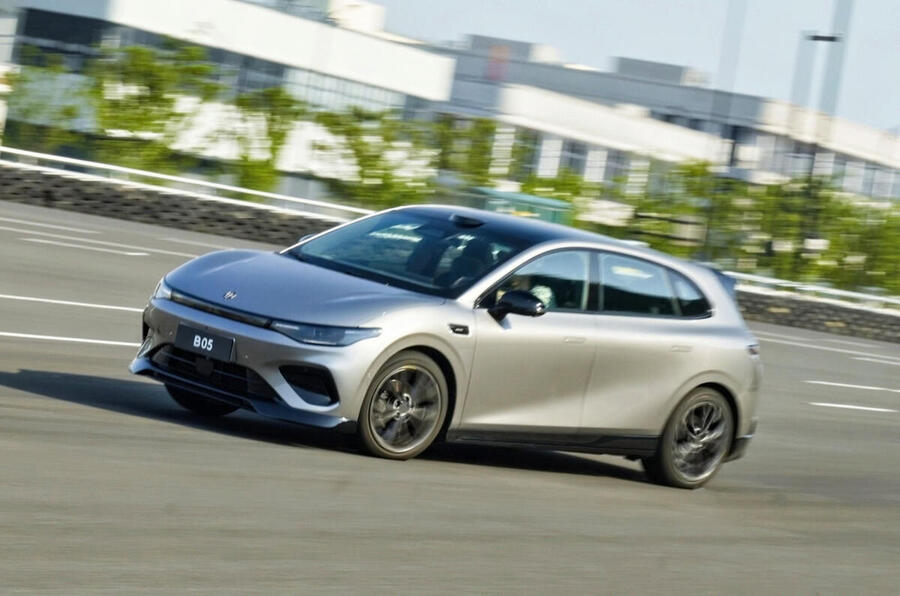
Leapmotor's second model was the far more mass-market T03 city car and it's now rapidly filling out its line-up. There are the B10 and C10 SUVs that form the core of its UK offering, along with saloons (the not-for-Europe C01), hatchbacks such as the Lafa 5 (which will come to the UK as the B05), crossovers (the B03X) and even MPVs (the D99).
Testing a number of these models back to back on a circuit in China, it's notable how different many of them are in terms of size, approach and target market, despite their shared parts and design details. As our testing has shown, there is still work to be done before Leapmotor's cars attain the refinement of European rivals, but the sense is of a car firm not afraid to try a variety of approaches, unconstrained by expectations.Â